
You have probably seen the letters NFT stuck next to a cartoon picture or a piece of digital art and wondered what the fuss was about. The headlines made it sound like people were paying fortunes for images that anyone could right-click and save. The idea underneath all that noise is simpler than it looks, and it comes down to ownership.
An NFT, short for non-fungible token, is a unique entry on a blockchain that proves who owns a particular digital item. Think of it as a certificate of ownership that nobody can secretly copy or forge. The item it points to might be a picture. It could just as easily be a ticket, a game character, or a membership pass.
This guide walks through what makes a token non-fungible, how NFTs work under the hood, what you actually own when you buy one, the practical uses beyond art, and the risks worth knowing before you spend a single coin.
What Is an NFT?
An NFT is a unique token recorded on a blockchain. The blockchain is a shared public ledger, so the record of who owns the token is visible to everyone and very hard to tamper with. Each NFT carries its own identity that sets it apart from every other token.
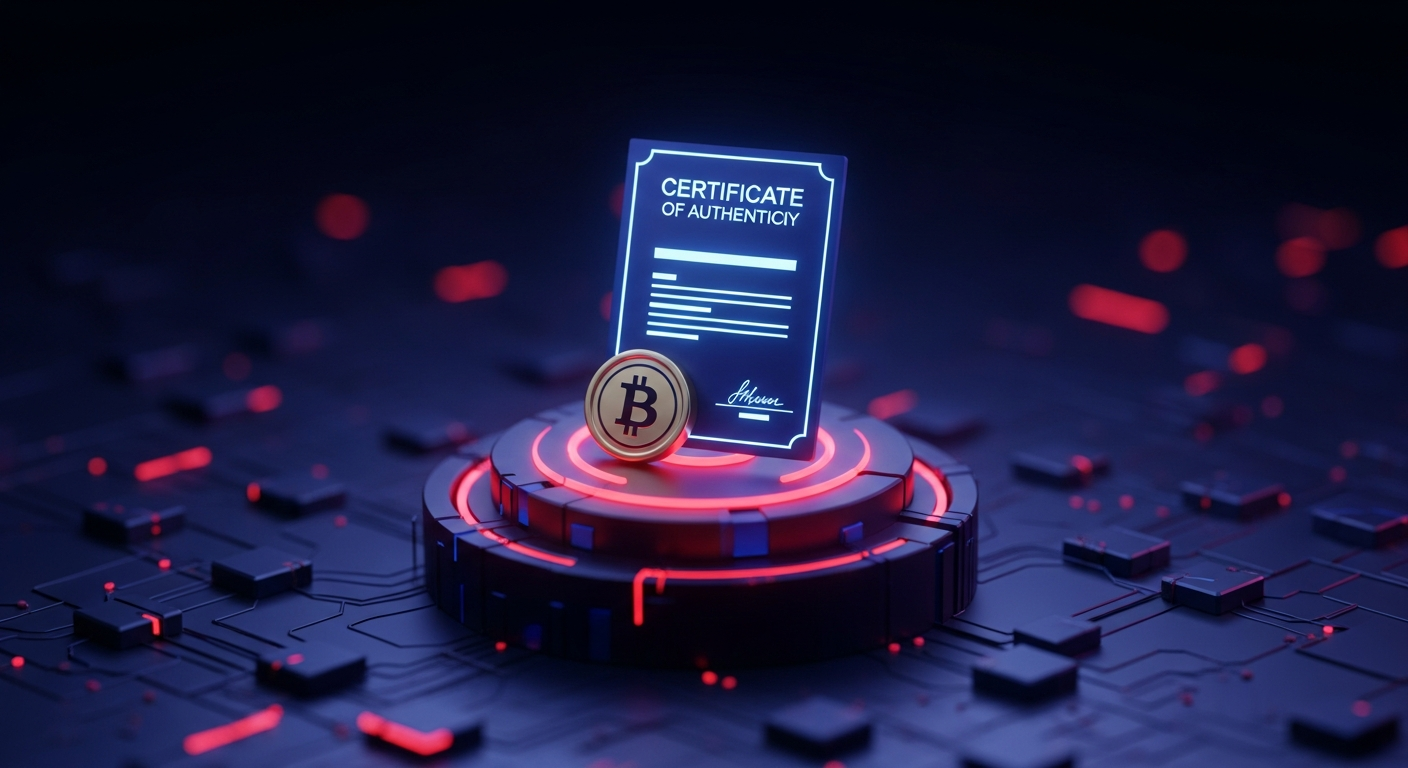
The easiest way to picture an NFT is as a digital certificate of ownership. Just as a deed proves you own a house, an NFT proves you hold a specific digital item. The certificate and the item are linked, and the blockchain keeps an honest history of every time that certificate changes hands.
- It is one of a kind and cannot be swapped for an identical copy.
- Its ownership record lives on a public blockchain for anyone to verify.
- It can point to almost any kind of digital or even physical thing.
Fungible Versus Non-Fungible
The word fungible sounds technical, but it just means interchangeable. Something is fungible when any one unit is exactly the same as any other. A one-dollar bill is fungible because trading your dollar for someone else's dollar leaves you exactly where you started. Most cryptocurrencies behave the same way, where one coin equals another.
Non-fungible is the opposite. Each item is unique and cannot be swapped one for one without losing something. A concert ticket for a specific seat, a signed painting, or your own house are all non-fungible because none of them is identical to another item of the same type.
- Fungible: identical and interchangeable, like cash or ordinary tokens.
- Non-fungible: unique and distinct, like a numbered ticket or a deed.
An NFT carries this quality into the digital world. Even if two NFTs look alike, the blockchain treats each as a separate item with its own history and owner.
How NFTs Actually Work
Most NFTs are created and managed by a smart contract, a small program that runs on the blockchain. A common standard for these contracts is ERC-721. The standard is just an agreed set of rules, so that wallets and marketplaces all handle a unique token the same way.
Each NFT has two key parts. The first is the token itself, a unique number recorded on the blockchain along with the address of its owner. The second is the metadata, the information describing the item: its name, its traits, and a reference to the actual picture or file.
Creating a new NFT is called minting. When someone mints an NFT, the smart contract adds a fresh, unique token to the blockchain and assigns it to the creator. From that point the token can be transferred, sold, or held like any other asset.
- The token is the unique on-chain record of ownership.
- The metadata describes what the token represents.
- Minting is the act of writing a brand-new token onto the blockchain.
Real Uses Beyond Art
NFTs became famous through digital art and collectibles, but the underlying idea of a verifiable unique token has many other uses. Anywhere you need to prove that something is genuine and belongs to a specific person, an NFT can do the job.
- Event tickets: A ticket issued as an NFT is hard to counterfeit, and the system can clearly show who holds the genuine entry.
- Gaming: Players can own in-game items, characters, or land as NFTs and potentially move them between compatible games or sell them.
- Memberships: Clubs and communities use NFTs as access passes that unlock events, content, or perks for holders.
- Identity and certificates: Diplomas, licenses, or proof-of-attendance badges can be issued as tokens that are easy to verify and hard to fake.
In each example the NFT is not really about a picture. It is a trustworthy record that says this specific thing belongs to this specific wallet, and that turns out to be useful well beyond the art world.
What You Actually Own
This is the part beginners get wrong most often. When you buy an NFT, you own the token on the blockchain, the unique record that points to an item. You do not automatically own the copyright to the underlying image, nor the right to control how others use it.
Owning the NFT is a bit like owning a numbered print of a famous artwork. You hold a recognized, verifiable copy, but the artist usually keeps the copyright unless they hand it to you in writing. Anyone can still view or copy the picture itself, since the file is often public.
- You own the on-chain token and the proof that you hold it.
- You usually do not own the copyright unless the seller grants it.
- Others copying the image does not erase your ownership of the token.
Where the actual file is stored matters too. If the picture lives on a private server that shuts down, the token may end up pointing to nothing. Projects that store files on more durable, decentralized systems reduce that risk.
Risks and Things to Watch
NFTs can be interesting, but they carry real risks too, especially for newcomers. Seeing those risks clearly helps you make calmer decisions instead of chasing excitement.
- Price volatility: NFT prices can swing wildly. An item that sells high one month may be worth very little later, and many never resell at all.
- Thin liquidity: Because each token is unique, finding a buyer when you want to sell is not guaranteed, unlike ordinary tokens that trade constantly.
- Wash trading: Some sales are arranged between accounts controlled by the same person to make a project look more active or valuable than it truly is.
- Scams: Fake collections, impersonated artists, and misleading hype are common, so a high price tag does not mean an item is legitimate.
None of this makes NFTs inherently good or bad. It means treating them as speculative and doing your homework beats assuming value from hype alone.
Hype Versus Real Utility
During the busiest periods, a lot of NFT excitement ran on the hope of quick profit rather than any practical use. Prices rose because people expected to sell to someone else for more, a pattern that can reverse sharply once buyers disappear.
Try to separate two different questions. The first is whether the NFT technology is useful. The second is whether a particular collection is worth its price. The technology can be genuinely valuable for tickets, memberships, or proof of ownership even when plenty of individual projects turn out to be worthless.
- Ask what real problem an NFT solves, not just what others paid.
- Be skeptical of promises of guaranteed gains or constant rising prices.
- Judge a project by its actual usefulness and the team behind it.
For a beginner the calm conclusion is this. An NFT is a tool for recording unique ownership, nothing more and nothing less. Some uses are genuinely helpful and plenty of projects are pure hype. Learning to tell the two apart is the most valuable skill you can build here.
Key Takeaways
- ✓An NFT is a unique token on a blockchain that acts as a verifiable certificate of ownership.
- ✓Fungible means interchangeable like cash, while non-fungible means unique like a numbered ticket.
- ✓NFTs work through smart contracts, often the ERC-721 standard, with a token plus its metadata.
- ✓Minting is the act of creating a brand-new token on the blockchain.
- ✓Useful beyond art for tickets, gaming items, memberships, and verifiable certificates.
- ✓Buying an NFT means owning the token, not automatically the copyright to the image.
- ✓Risks include price volatility, thin liquidity, wash trading, and outright scams.
Frequently Asked Questions
If anyone can copy the image, what is the point of owning the NFT?+
Copying the image only makes a copy of the file. The NFT is the verifiable record of who owns the original token, and the blockchain tracks that record. Owning it is about provable ownership and history, not about stopping others from seeing the picture.
Do I own the copyright when I buy an NFT?+
Usually not. You own the token, but the creator normally keeps the copyright unless they transfer it to you in writing. Check the specific terms a project offers before assuming you have any extra rights.
Are NFTs only used for digital art?+
No. Art and collectibles made them famous, but the same technology works for event tickets, in-game items, memberships, certificates, and identity. The core idea is a verifiable record of unique ownership.
Are NFTs a safe investment?+
They are speculative and can be very risky. Prices are volatile, many tokens are hard to resell, and scams are common. Treat them as uncertain rather than guaranteed, and never risk money you cannot afford to lose.
What does minting an NFT mean?+
Minting is the process of creating a new NFT by writing a fresh, unique token onto the blockchain through a smart contract. Once minted, the token can be transferred, sold, or held like any other asset.
Sources & Further Reading
This guide is general educational information, not financial, legal, or security advice. Crypto transactions are irreversible, always do your own research and verify independently before acting.