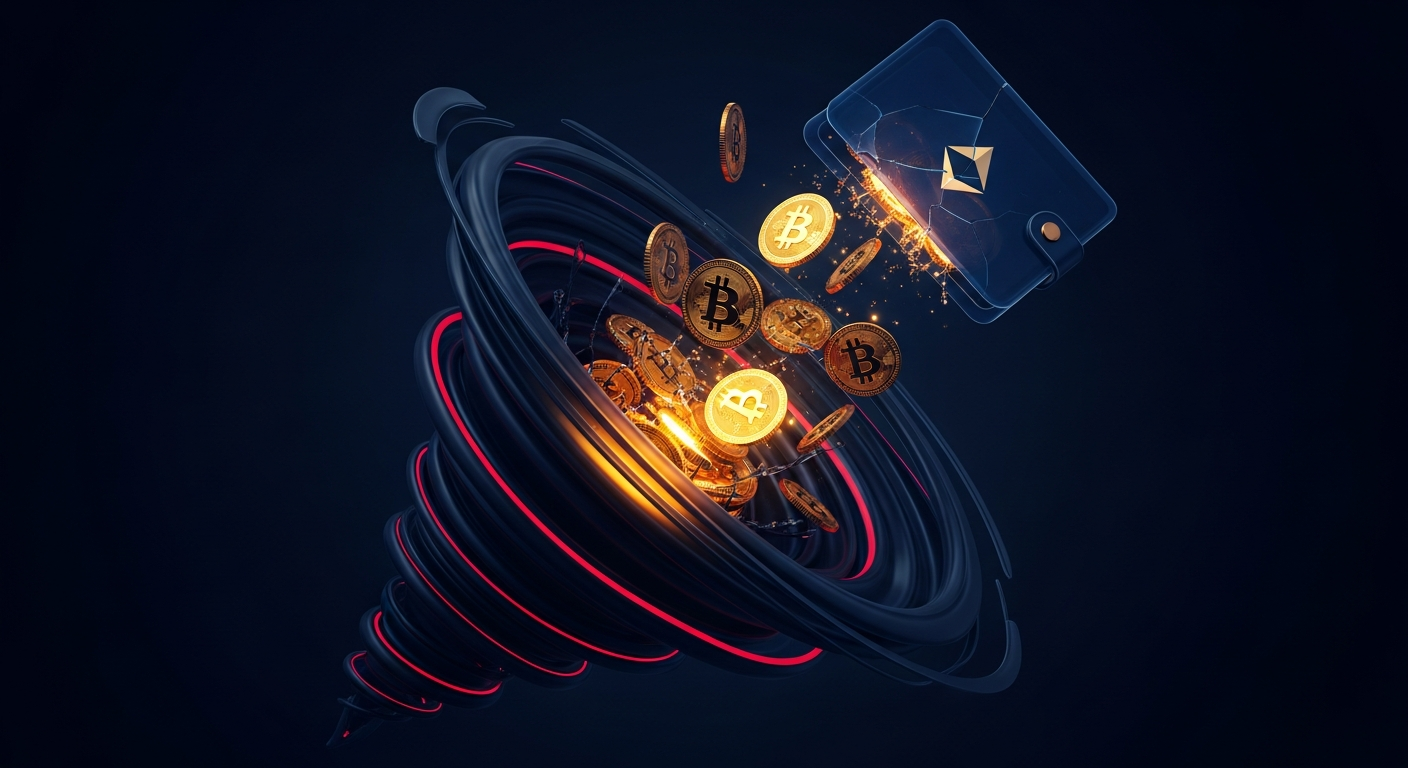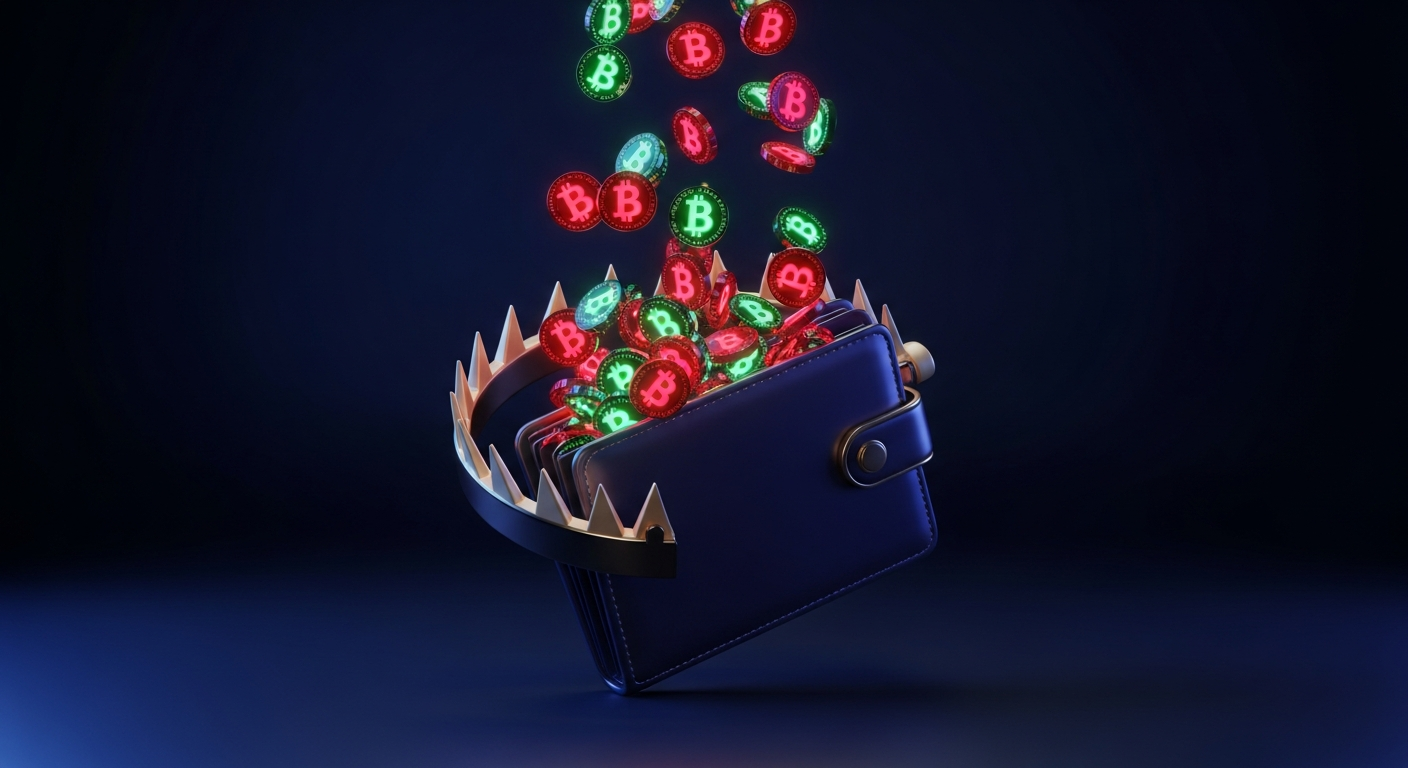
A rug pull is an exit scam in which the people behind a crypto token take the money invested in it and disappear, leaving holders with assets that are worthless or impossible to sell. The name comes from the image of having the rug pulled out from under you: one moment the project looks healthy, the next the liquidity is gone and the price has collapsed to zero.
Rug pulls thrive on speed and emotion. New tokens launch constantly, prices move fast, and communities form around the fear of missing out. Scammers exploit that environment by manufacturing hype, hiding control of the contract, and structuring the token so they can drain it whenever they choose. Most victims never read the contract or check who controls the liquidity, which is exactly what the scam depends on.
The good news is that the vast majority of rug pulls leave the same fingerprints. The control mechanisms that make an exit possible are visible on the blockchain, and the marketing patterns that lure buyers in are predictable. This guide explains what rug pulls are, how they work in plain language, and the practical checks you can run yourself before risking any money.
What a rug pull actually is
A rug pull is a deliberate scam, not a project that simply failed. Honest projects can run out of money, lose users, or get outcompeted, and the token may still fall to near zero. A rug pull is different: the creators design or operate the token so they can extract value at the expense of holders, then they do it on purpose and walk away.
The defining feature is intent combined with control. Whoever launches a token usually holds powerful privileges over it, at least at first. They control the liquidity pool that lets people trade, they may control the supply, and they often control administrative functions written into the contract. A rug pull happens when someone uses those privileges to enrich themselves and abandon everyone else.
Because the mechanics are about control, the question you should always ask is simple: who can take the money, and what is stopping them? If the honest answer is "the team, at any time, with nothing stopping them," you are looking at a token that can be rugged whether or not it has been yet.
The two main types: hard rugs and soft rugs
Rug pulls fall into two broad families based on how the value is extracted.
A hard rug is fast and technical. The scammers use code or control to drain everything in a single move, often within minutes or seconds. The most common hard rugs are:
- Liquidity removal: the team withdraws the funds that back trading on a decentralized exchange, so the token can no longer be sold for anything of value.
- Malicious mint backdoor: a hidden or owner-only function lets the team create unlimited new tokens, which they sell into the pool, crashing the price and taking the proceeds.
- Honeypot logic: the contract is written so that buyers can purchase but cannot sell, trapping money until the team cashes out.
A soft rug is slow and behavioral. There may be no single malicious transaction. Instead the team quietly sells the large allocation they reserved for themselves, stops developing the product, deletes social channels, and lets the project decay. Holders are left with a token that nobody supports and that slowly bleeds to zero. Soft rugs are harder to prove and often get described as a project that "just died," but the early dumping and abandonment are the tell.
The mechanics in plain language
You do not need to be a developer to understand the levers that make a rug possible. A handful of structural features show up again and again.
- Unlocked liquidity: trading depends on a pool of paired assets. If that liquidity is unlocked, the team can pull it out at any moment, which removes the ability to sell. Locked liquidity, by contrast, is held by a time lock or escrow that the team cannot touch until a set date.
- Mint functions: a token with an open mint function lets whoever controls it create new supply on demand. Unlimited or owner-controlled minting means the team can dilute every holder to nothing and dump the new tokens.
- Proxy upgradeable contracts: some contracts are written so the team can replace the underlying code later. This can be legitimate for maintenance, but it also means the rules you reviewed today can be swapped for malicious ones tomorrow without warning.
- High team allocation: when a large share of total supply sits in team or insider wallets, those holders can crash the market simply by selling. A token where insiders hold most of the supply is one large sell order away from collapse.
- Hidden owner privileges: functions that pause trading, blacklist wallets, change fees to extreme levels, or exclude certain addresses from limits give the owner power to trap or tax holders. Names are sometimes obscured, but the capability is in the code.
None of these features guarantees a scam on its own. Some are normal in early projects. The danger is the combination: unlocked liquidity plus an open mint plus a huge insider allocation plus an anonymous team is a loaded gun pointed at every buyer.
The marketing playbook
Rug pulls almost always come wrapped in the same promotional packaging, because the goal is to attract money quickly before anyone looks closely. Recognizing the pattern is half the defense.
- Anonymous team: founders who refuse to reveal real identities have nothing to lose by disappearing. Anonymity is not proof of fraud, but it removes accountability and is the norm in exit scams.
- Paid influencers: coordinated promotion from accounts that suddenly all push the same token, often without disclosing payment, manufactures the appearance of organic interest.
- Fake or shallow audits: scammers display an "audited" badge that links to a meaningless review, a forged report, or an audit of a different contract entirely. The badge exists to reassure, not to inform.
- Artificial urgency: countdown timers, limited "presale" windows, and constant messaging that you must buy now before you miss out are designed to stop you from doing research.
- Guaranteed or absurd returns: promises of huge fixed gains, "risk-free" staking, or price targets stated as certainties are hallmarks of a scam, because no honest project can guarantee returns.
The underlying tactic is emotional pressure. Every element of the playbook pushes you toward acting fast and thinking later. The simplest counter is a personal rule that no amount of hype changes how long you spend on due diligence.
On-chain due diligence anyone can do
Most of what you need to evaluate a token is public and free to check. You do not need special tools beyond a block explorer and a token analysis site. Run through this list before buying.
- Liquidity lock: confirm that the liquidity is locked or burned, and check for how long. Unlocked liquidity, or a lock that expires in days, means the floor under the token can vanish at any time.
- Holder concentration: look at the distribution of holders. If a handful of wallets, or the team wallet, control a large percentage of supply, a single decision can crater the price. Watch for many fresh wallets funded from the same source, a sign of one party in disguise.
- Contract verification: the contract source code should be published and verified on the explorer so anyone can read it. Unverified code hides what the token can do and is a serious warning sign.
- Renounced ownership: check whether the owner has renounced control of administrative functions. Renouncement removes the ability to mint, pause, or alter the contract. Be careful, though: renouncing after planting a backdoor, or renouncing while liquidity stays unlocked, does not make a token safe.
- Audit authenticity: if an audit is claimed, find the report from the auditing firm directly and confirm it covers this exact contract. Check that the firm is real, that the report lists the deployed contract address, and that the issues raised were actually fixed.
- Function review: scan the verified contract for mint functions, fee-changing functions, blacklist or pause logic, and proxy upgrade patterns. Free token scanners flag many of these automatically and are a fast first pass.
Treat these checks as a checklist where any single failure is enough to walk away. You are not trying to prove a token is good; you are trying to find one reason it could be a trap, and stopping the moment you do.
What to do after a rug
If you get caught, act quickly and protect what remains. The first priority is stopping further loss. Revoke any token approvals you granted to the project's contracts, because lingering approvals can let a malicious contract drain other tokens from your wallet later. A revoke tool lets you see and cancel these permissions.
Do not buy more in the hope of a bounce, and be extremely wary of anyone offering to recover your funds for a fee. Recovery scams target rug victims specifically, because they know you are emotional and looking for a way out. No legitimate service asks for an upfront payment or your seed phrase to return lost crypto.
Document everything: the contract address, transaction hashes, the wallets involved, and the marketing that promoted the token. This record helps if you report the scam to relevant authorities or platforms, and it warns others. Reporting rarely returns money, but it can get the token flagged and protect the next person. Finally, treat the loss as a tuition payment for a process: the goal is to make the checks in this guide automatic so the next loaded token never gets your money in the first place.
Red Flags to Watch For
- ✕Liquidity is unlocked, or the lock expires within days, so the team can pull the pool at any time.
- ✕A few wallets or the team hold a large share of total supply, often funded from the same source.
- ✕The contract is unverified, hiding what the token can actually do.
- ✕The code contains an open or owner-controlled mint function that can inflate supply.
- ✕Hidden owner privileges exist, such as pause, blacklist, or extreme fee-changing functions.
- ✕The team is fully anonymous with no accountability and no real track record.
- ✕The audit is fake, shallow, or covers a different contract than the one deployed.
- ✕Promotion relies on paid influencers, countdown timers, and guaranteed-return promises.
How to Protect Yourself
- ✓Confirm liquidity is locked or burned, and check how long the lock lasts.
- ✓Review holder distribution and avoid tokens where insiders control most of the supply.
- ✓Insist on a verified contract and read it, or run it through a free token scanner.
- ✓Prefer renounced ownership, but verify there is no backdoor hiding behind it.
- ✓Validate any audit directly with the auditing firm and confirm it matches the deployed address.
- ✓Avoid anonymous teams and treat hype, urgency, and guaranteed returns as reasons to walk away.
- ✓Size positions so a total loss on any single token is survivable.
- ✓Revoke token approvals regularly and never pay upfront fees for fund recovery.
Frequently Asked Questions
Does renounced ownership mean a token is safe?+
No. Renouncing ownership removes the team's ability to call administrative functions, which is a positive sign, but it does not undo a backdoor that is already in the code, and it does nothing if liquidity is still unlocked. Renouncement is one check among several, not a guarantee.
What is the difference between a rug pull and a project that just failed?+
A failed project runs out of money or users despite genuine effort, with no deliberate theft. A rug pull involves intent: the creators use their control over liquidity, supply, or contract functions to extract value and abandon holders on purpose. The token can hit zero in both cases, but a rug is a scam.
Can locked liquidity still be a scam?+
Yes. Locked liquidity stops the team from pulling the pool, but it does not prevent a soft rug where insiders dump a large allocation and abandon the project, and it does not block a malicious mint that crashes the price. Always combine the liquidity check with holder concentration and a contract review.
How can I tell if an audit is real?+
Find the report on the auditing firm's own records rather than trusting a badge on the project's site. Confirm the firm exists and is reputable, that the report lists the exact deployed contract address, and that the issues it raised were actually fixed. A badge that links nowhere or covers a different contract is meaningless.
What should I do immediately if I get rugged?+
Revoke any token approvals you granted to the project's contracts so a malicious contract cannot drain more of your wallet, stop buying in hope of a recovery, and ignore anyone offering paid fund recovery, as those are follow-up scams. Document the contract address and transactions so you can report the scam and warn others.
This guide is general educational information, not financial, legal, or security advice. Crypto transactions are irreversible — always do your own research and verify independently before acting.