
Research Policy
Who pays for discovery, and what that money quietly decides
Funding structure is not a footnote to scientific progress. It is one of the main forces determining which questions get asked.
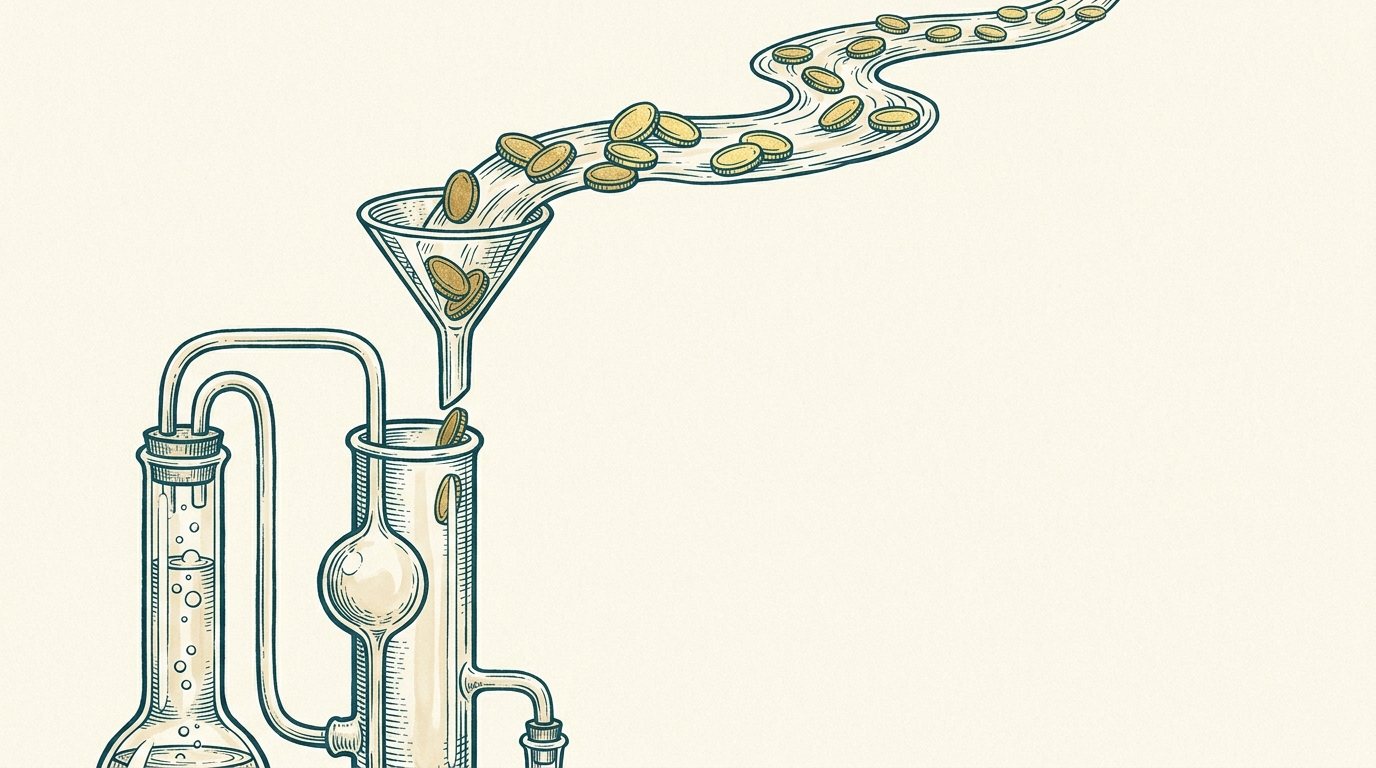
Research requires sustained money over long periods with uncertain outcomes. That is an unusual thing to finance, and the mechanisms that have evolved to do it each carry their own bias. None of those biases is hidden. They are simply rarely discussed alongside the results they shape.
Grants and the shape they impose
Public funding is typically awarded in cycles of a few years against a proposal reviewed by other researchers. The system rewards work that is credible, competently designed and likely to produce a result. Those are reasonable things to reward.
The consequence is a mild but persistent pull toward the incremental. A proposal that extends an established line has a visible path to a publishable outcome. A proposal that might fail entirely does not. Reviewers are not being timid. They are allocating limited money under uncertainty, which is exactly what they were asked to do.
Commercial funding and the exit
Private capital operates on a different clock and answers a different question, which is whether the work leads to something that can be sold. This produces real strengths. Commercial funding is far more willing to pay for the unglamorous later stages, the manufacturing, the scale up, the large trials, that grant funding rarely covers.
It also concentrates attention. Conditions common in wealthy populations attract more investment than conditions that are not, regardless of how much suffering each causes. This is not a moral failure of any individual. It is what the mechanism optimises for, and it will keep producing that outcome until the mechanism changes.
Philanthropy in the gaps
Charitable funding often occupies the space between the two, tolerating higher risk than a grant committee and a longer horizon than an investor. Its weakness is scale and consistency. It depends on the interests of a small number of donors, so it moves with attention rather than with need.
The practical reading for anyone following this field is straightforward. When a research area accelerates, it is worth asking what changed in its funding before assuming what changed was the science. Very often the discovery that unlocked the field was a discovery about money.
Continue reading
The cells that stop dividing but refuse to leave
Senescence is one of the most studied ideas in the biology of ageing. Here is what the term actually means, and where the honest edges of the science are.
Read the piece →The retina is nervous tissue, and that changes everything
The eye is often described as a camera. The comparison is useful for optics and misleading for almost everything else.
Read the piece →The clock that starts when an organ leaves the body
Transplantation is often told as a story about surgery. Much of the real constraint is a story about time and temperature.
Read the piece →